

In #Astrophotography, star trails are a type of photograph that utilizes long-exposure times to capture the apparent motion of stars in the night sky due to the rotation of the Earth.
A star trail photograph shows individual stars as streaks across the image, with longer exposures resulting in longer streaks. Typical exposure times for a star trail range from 15 minutes to several hours, requiring a ‘bulb’ setting on the camera to open the shutter for a longer period than is normal. Star trails have been used by professional astronomers to measure the quality of observing locations for major telescopes.
How To: Star trail photographs are captured by placing a camera on a tripod, pointing the lens toward the sky, and allowing the shutter to stay open for a long period of time.
Star trails are considered relatively easy for amateur astrophotographers to create. Photographers generally make these images by using a SLR camera with its lens focus set to infinity. A cable release allows the photographer to hold the shutter open for the desired amount of time.
Images: Slow Dance Circumpolar startrail, Shooting Stars November 2001, Camping under trailing stars, Star trails under moon light, Star trails at Berner Oberland, Switzerland


feather sculptures by kate mccgwire
london-based sculptor kate mccgwire has created a new collection of feather sculptures including ‘guile’, ‘lure’, ‘seer’, ‘quell’, and ‘yearn’. each piece is a winding and lively, yet, frozen shape formed from plumage, making her body of work seem at once both graceful and deadly. the fantastical forms are made from thousands of wing and tail feathers gathered from many birds including those of pigeon, magpie, goose, teal, pheasant, duck and woodcock, collected and sent by mail from farmers and pigeon racers.

Perhaps inspired by Taylor, St Petersburger and Chips, or some other photographer of abandonment on tumblr, it’s been on my list to explore the disused barracks that overlook the town of Whittier, Alaska. Its five sprawling floors of decay did not disappoint.
Snowed in (Buckner Building, Whittier, Alaska)
Seizure, glistening cave of copper-sulphate crystals, moves to Yorkshire →

octopus

concrete phaidon


A drop of fluorescent dye falling into quiescent water forms fantastical structures that are a mixture of vorticity, turbulence, and molecular diffusion. The horseshoe-like shape near the front of the drop is a typical shape for two fluids strained by moving past one another. The main section of the drop billows outward like a parachute, but the turbulence of its wake stretches the dye into fine threads that quickly disperse in the water. (Photo credit: D. Quinn et al.)


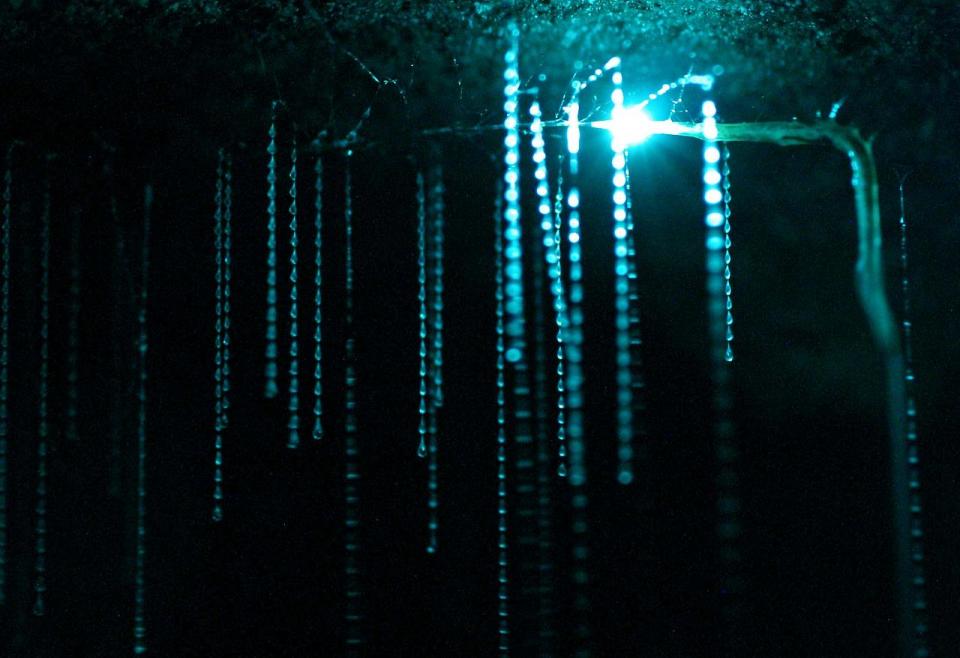

Waitomo Glowworm Caves are a famous tourist attraction because of the large population of fireflies that live in caves. Fireflies, or Arachnocampa luminosa - tiny bioluminescent creatures that produce blue and green light live exclusively in New Zealand.
Sourcezhuuuuuubinnnnn bring meeee
Source: http://lifeglobe.net/entry/5178


It might look like something went horribly wrong in the images above, but the psychedelic colors and patterns are actually deliberate. Peter Hoffman coated his negatives with a tiny bit of gasoline.
After letting it burn for a few split seconds, Peter quickly extinguishes the flame and prints the image from the newly ‘ruined’ negative.


Messier 78 (NGC 2068)

Make cool images with emergent algorithm
Oh my word! This could keep me occupied for hours!
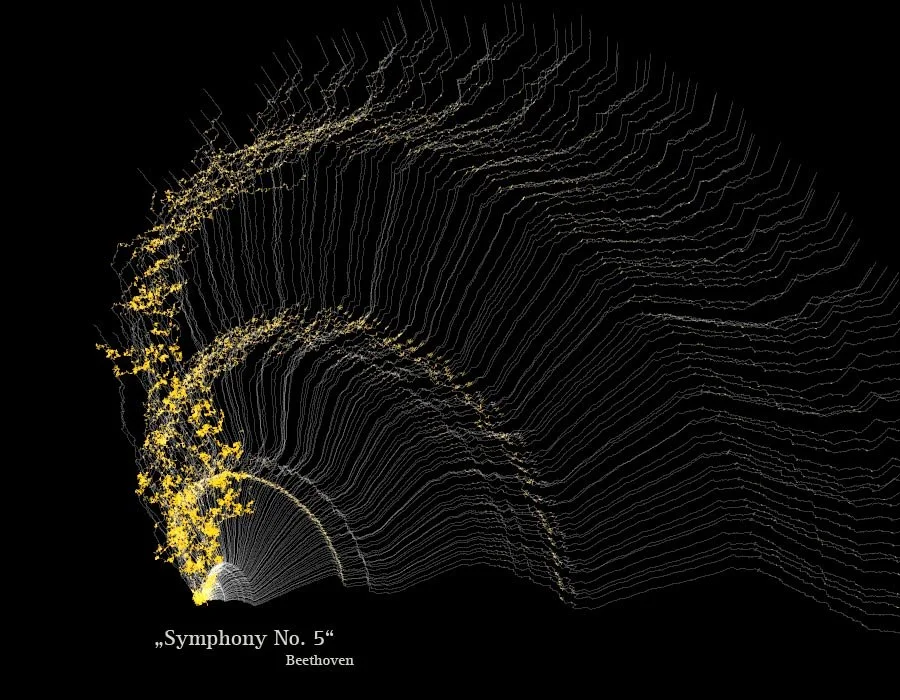


Narratives 2.0 by Matthias Dittrich
The Applet should demonstrate the behavior of the lines in relation to music.
Tokyo City Symphony
Use 3D projection mapping art to play the city’s symphony
Source: http://tokyocitysymphony.com/