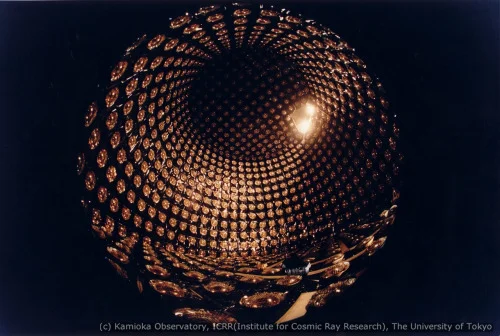
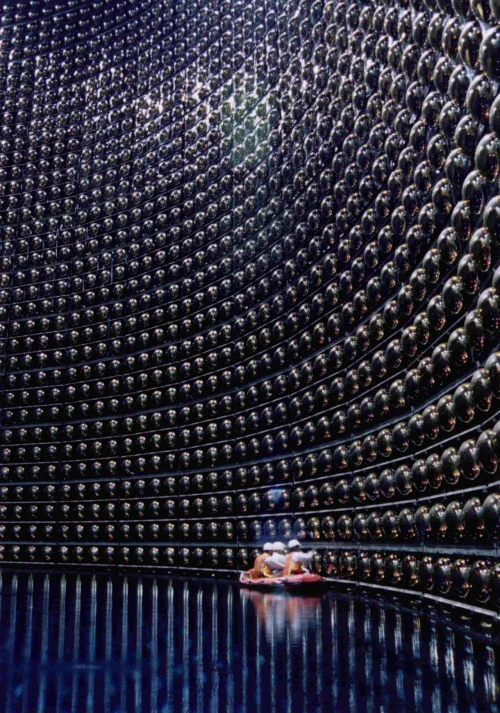
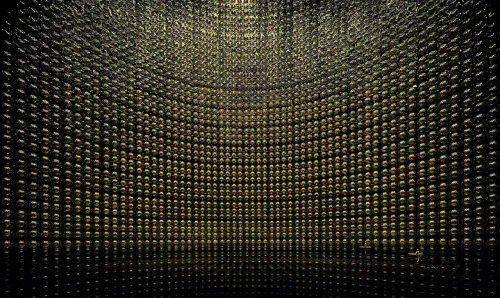
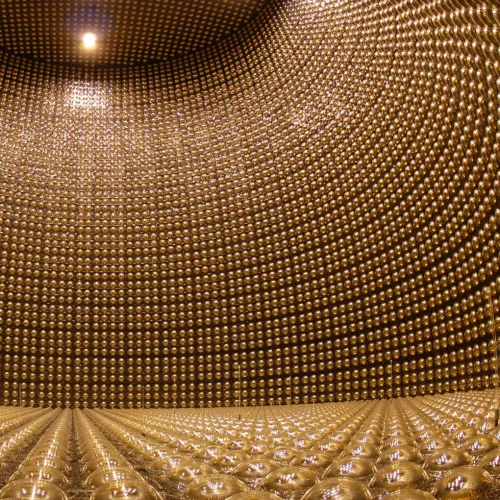
The Super Kamiokande (Kamioka Neutrino Detection Experiment) is a neutrino observatory located under Mount Kamioka in Japan. It is designed to observe solar and atmospheric neutrinos, neutrinos from supernovae, and aims to search for proton decay. It is a cylindrical structure measuring about 40 m tall and 40 m across, is covered in over 11,000 photomultiplier tubes (PMTs), and filled with 50,000 tons of pure water.
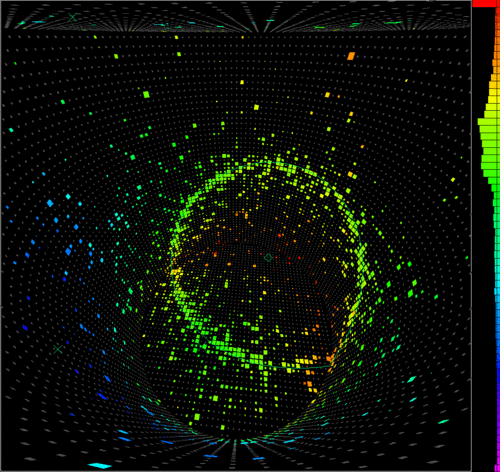
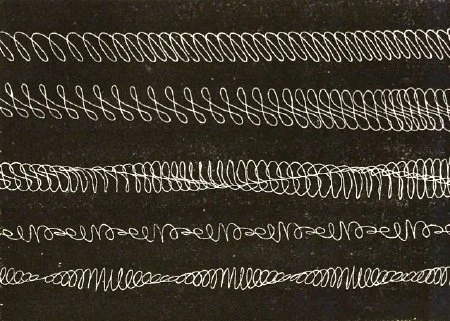
Neutrinos weakly interact with other particles, making it extremely difficult to detect them and observe their properties; in fact, they cannot be directed detected at all. Detectors are built underground to isolate it from other radiation. When a neutrino passes through the Super-K’s water tank, it will sometimes (hopefully) collide with a quark, causing it to change into a charged lepton (electron, muon, or tau). The very short version of what happens next is that the lepton will travel faster than the speed of light in water (not in vacuum), polarizing the water molecules; when they return to their ground state, Cherenkov radiation is emitted in a flash of light, which the PMTs detect. The last image is of a Cherenkov ring by an electron created from a neutrino collision in the Super-K, in perspective view.
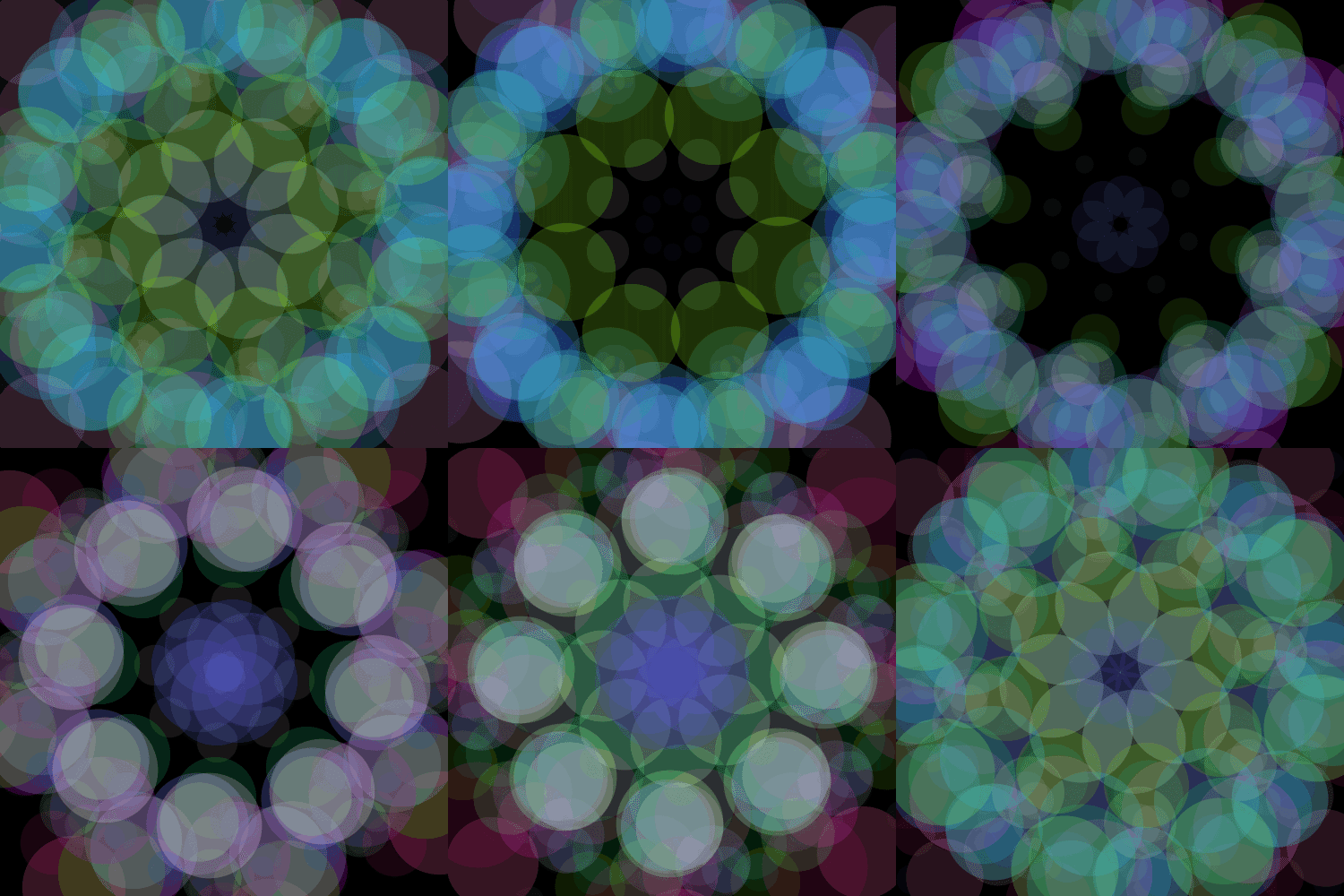
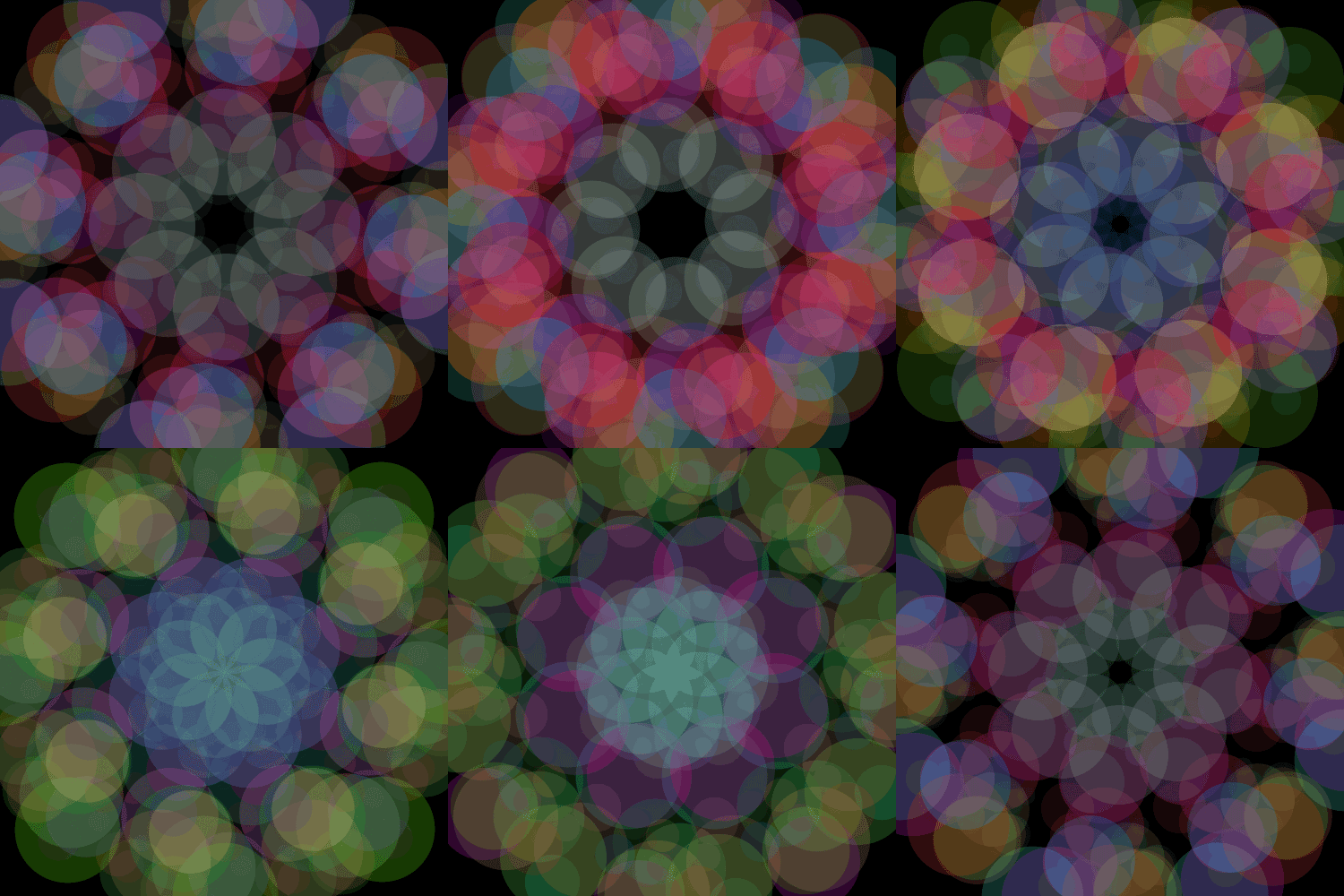
Mathematica code:
RR[n_, m_] := (SeedRandom[n*m]; RandomReal[])

L[t_, Q, g_, i_] := Sum[ Exp[-(t - (RR[i, 5*Q] + j))^2/g], {j, {-1, 0, 1}}]

G[c_, F_, P_, s_, o_, g_, A_, a_, w_, t_, r_, Q_, pr_, is_] :=
 Graphics[
  Table[
   Table[
    {RGBColor[RR[i, Q], RR[i, 2*Q], RR[i, 3*Q], o + A*L[t, 5*Q, g, i]],
     Disk[
      RotationTransform[(k + (-1)^(i*w)*t*a)*2 Pi/F]
       [{r*RR[2 i, 4*Q], r*RR[2 i + 1, 4*Q]}], s*L[t, 5*Q, g, i]]},
   {k, 0, F - 1, 1}],
  {i, 1, P, 1}],
 PlotRange -> pr, ImageSize -> is,  Background -> If[c == 0, White, Black]]

Table[
 ListAnimate[
  Table[
   G[1, 8, 30, .12, 0, .1, .25, 1, 1, t, .5, Q, .5, 500]
  {t, 0, 15/16, 1/16}],
 AnimationRunning -> False],
{Q, {33, 34}}]

un:
Based on the golden ratio omgFigure 10. The geometric reconstruction of Stradivari’s sketch of a violin scroll.


Sound Waves in Light by Gabey Tjon A Tham
Using lighted wires, Gabey simulates sound waves which undulate and vibrate in accordance with the ambient noise emanating around them. I’m not positive, but I’m pretty sure this is what opens the dimension that Gozer the Traveler resides in.

The Makers Project, a photographic project by Jennifer Causey
~ As a visual person, makers have always been a constant source of inspiration. I love visiting each studio and spending time with these amazing people, doing what they love. I hope you enjoy exploring these images as much as I loved taking them.

Moth Proboscis.


The Mathematics of Beauty
The Fibonacci Sequence is a sequence of numbers where each number is the sum of the previous two—i.e., 0, 1, 1, 2, 3, 5, 8, 13, 21, 34…and so on to infinity. The ratio of one number to the next is approximately 1.61803, which is called “phi”, or the Golden Ratio. It’s not a magical mathematical equation of the universe, but it definitely reflects natural, aesthetically beautiful patterns. The ratio been used as the ideal proportion standard by artists and architects throughout history, and it’s also found in nature because it’s one of the most efficient way to pack things together. The human body can mostly be divided up in terms of the golden ratio, with one nose, two eyes, three segments to each limb, five fingers on each hand, and our measurements and proportions also reflect the ratio, especially the proportions of the human face—the width of the nose, position of the eyes, length of the chin. Our attraction to another person increases if their body and features are symmetrical and proportional, since we perceive them to be healthier, and so the Golden Ratio appears to be connected with humans ideals of beauty. It’s worth noting, however, that although the ratio can create a beautiful face, it can’t create a beautiful mind.


Star trails over the Australian Outback by photographer Lincoln Harrison
Let’s not forget to credit (with links) the photographer who spent hours and hours to capture these stunning photographs!
Source: http://lincolnharrison.com


Wingtip vortices roll up in the wake of this U.S. Coast Guard C-130J. At the edge of a wing high-pressure, low velocity air is able to creep around the edge of the wingtip toward the low-pressure, high-velocity air atop the wing. This creates a swirling vortex that trails behind each wing, made visible here by the clouds entrained in the plane’s wake. Over time, these counter-rotating vortices will sink downward and break up due to viscosity and instabilities induced by their proximity. (via Aviationist)
un:
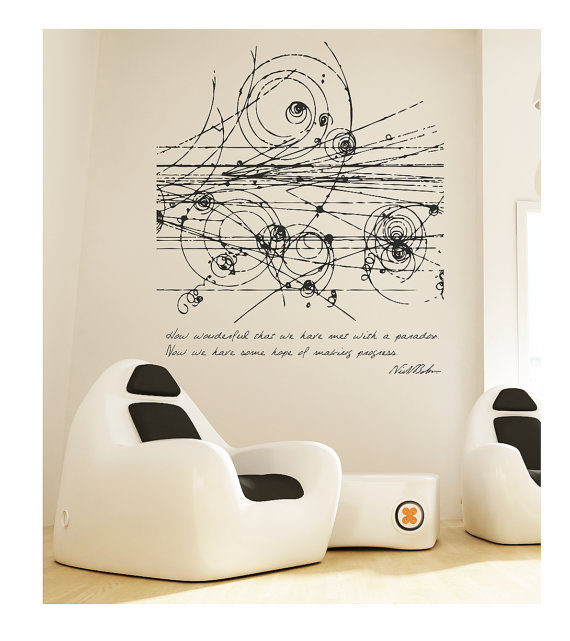
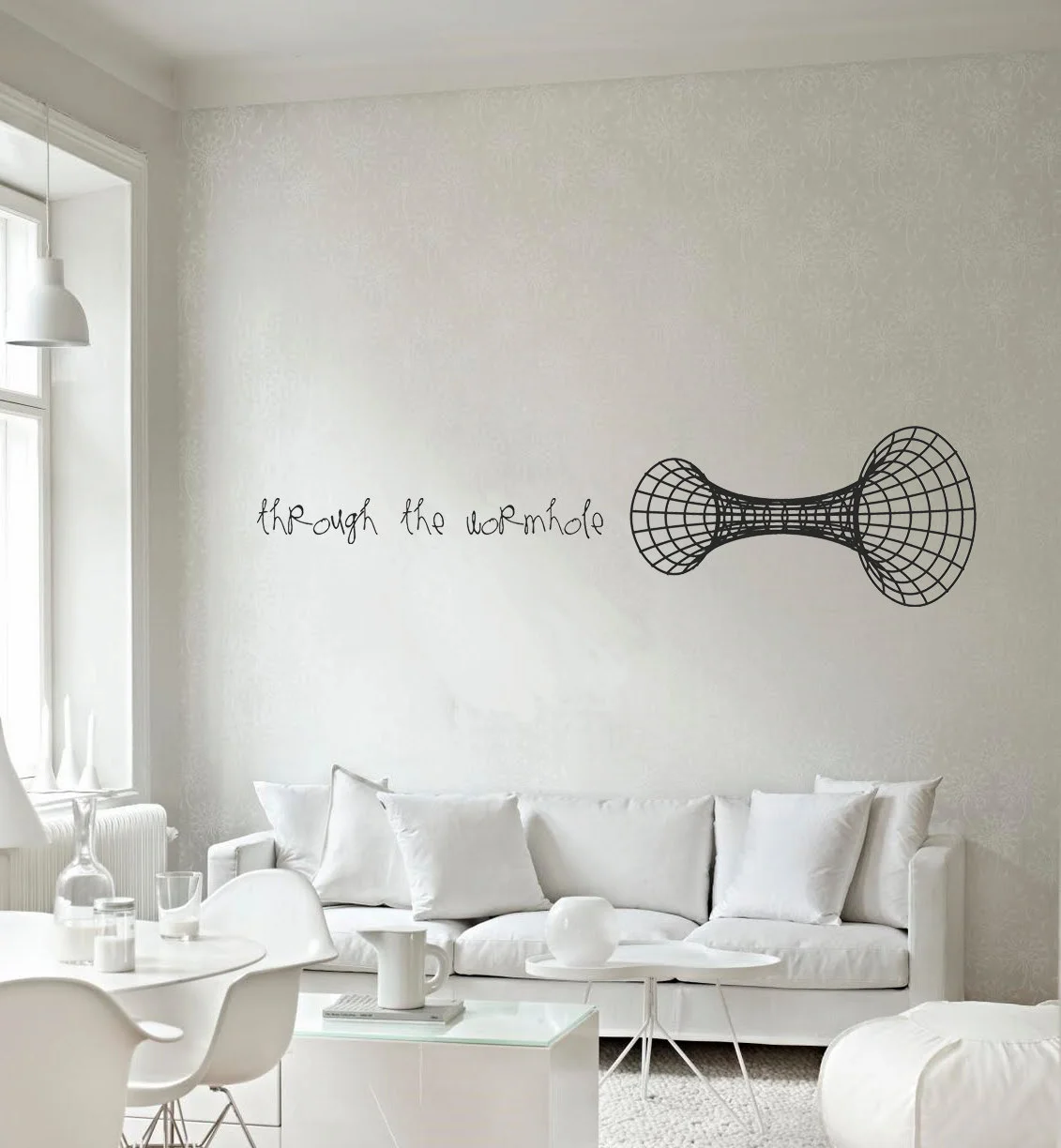
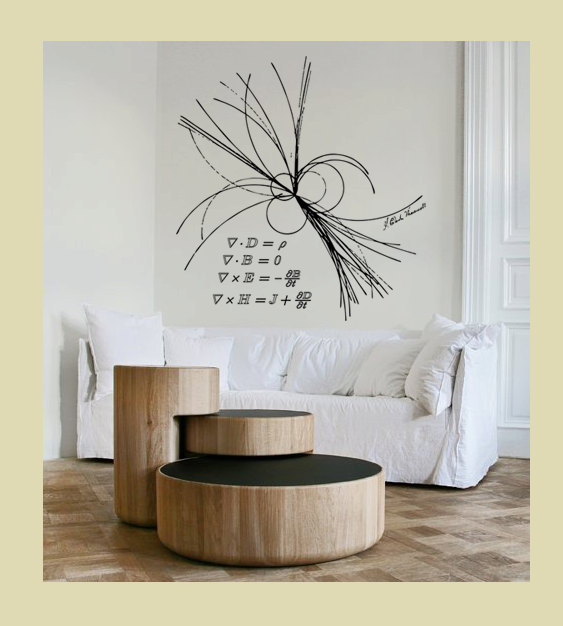
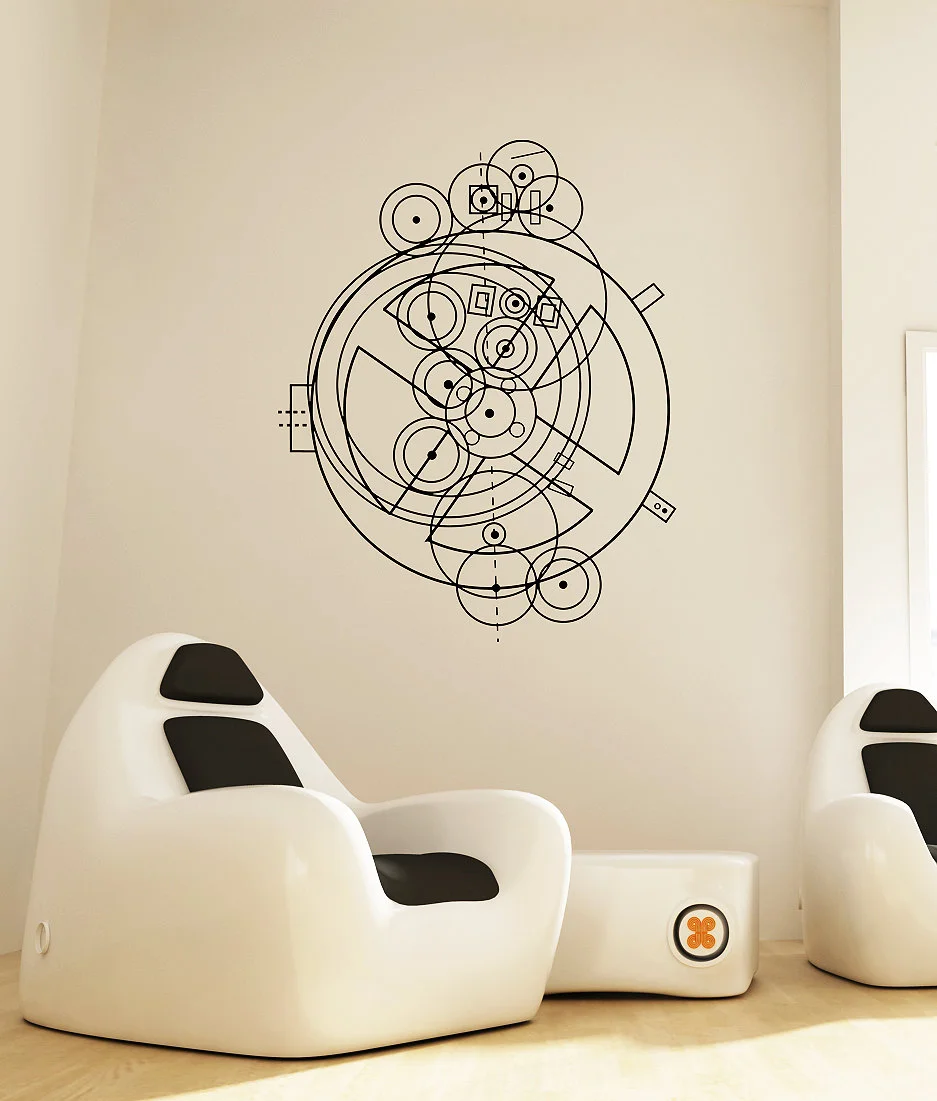
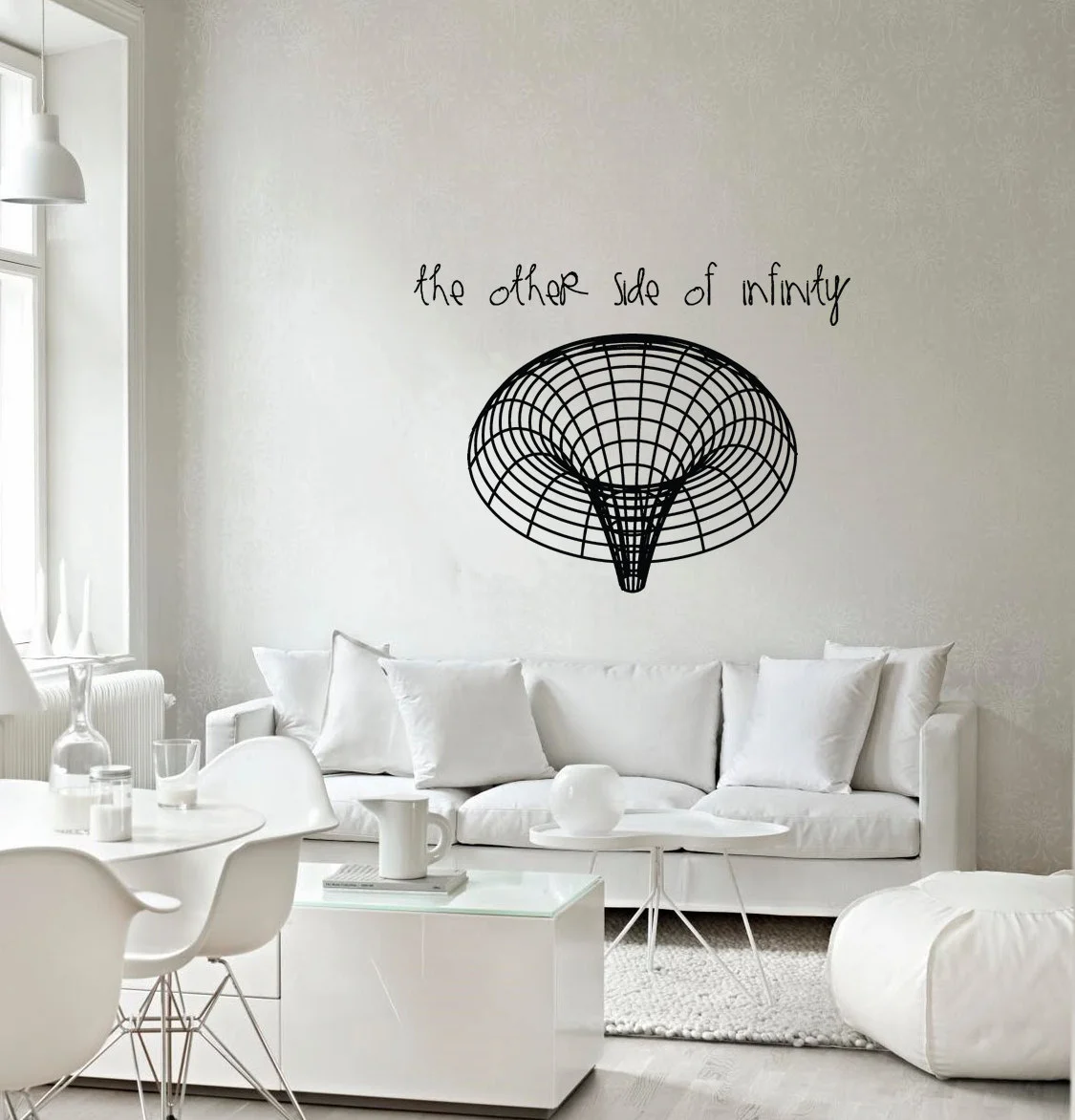
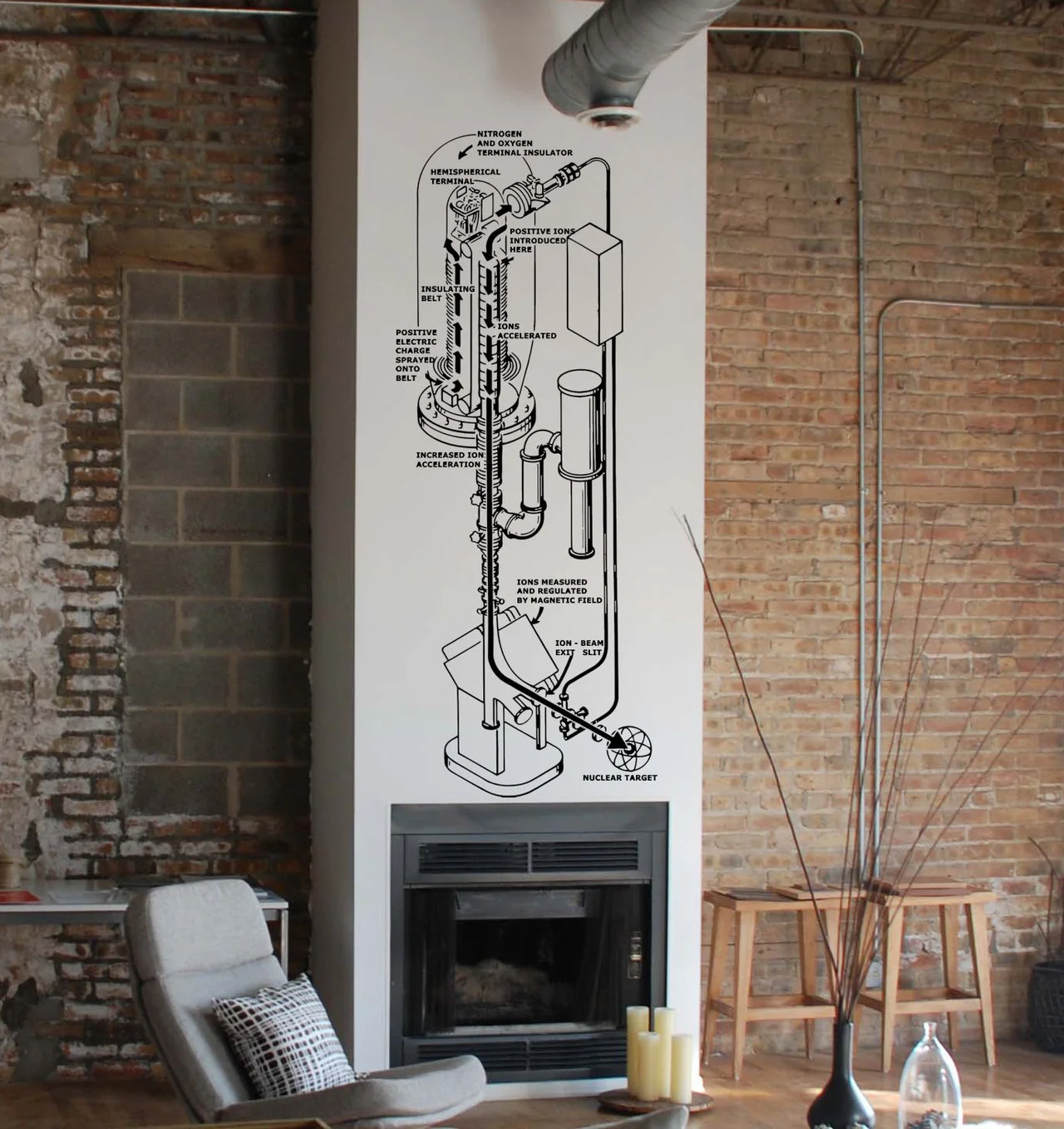
Love the prints, but that chair is horrid. From the set of ‘Space: 1999’ishElegant ideas for an elegant home. These vinyl wall decals are available from the Cut N Paste Etsy shop.
ermegherd.

Chemnitz-Stadthalle
(via ctructur)


Ma-Adan - Iraq
The marsh dwellers have populated the Edenic wetlands for almost 5000 years. They were an almost completely self sufficient community with the marshes producing everything they needed to survive. Sturdy reeds reaching 20 feet became raw material for homes, baskets and boats, while tender reed shoots provided plentiful forage for water buffalo, who provided milk and dung, used as fuel for fires.
The marsh-dwelling people who in the 1950’s numbered about half a million people, have now dwindled to as few as 20,000 in Iraq. The Edenic wetlands that once gave refuge to a rich variety of wildlife have become lifeless, nearly waterless, salt-encrusted mudflats, since Saddam ordered the water source to be cut off just before he lost power. Today the Eden Again Project is attempting to release water back into the marshes, with the hope that the communities will return to their original site.


Click through for a beautiful video of the work in action.
Little Shining Man, 2011 by Heather & Ivan Morison and Queen + Crawford_
(via: triangulationblog)


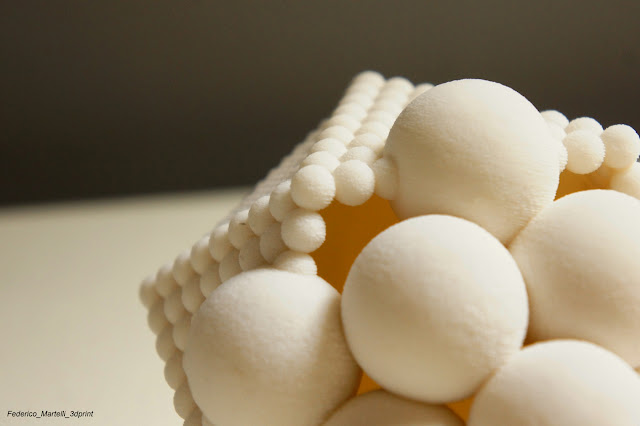


Malachite