“Strangeness is the indispensable condiment of all beauty.”
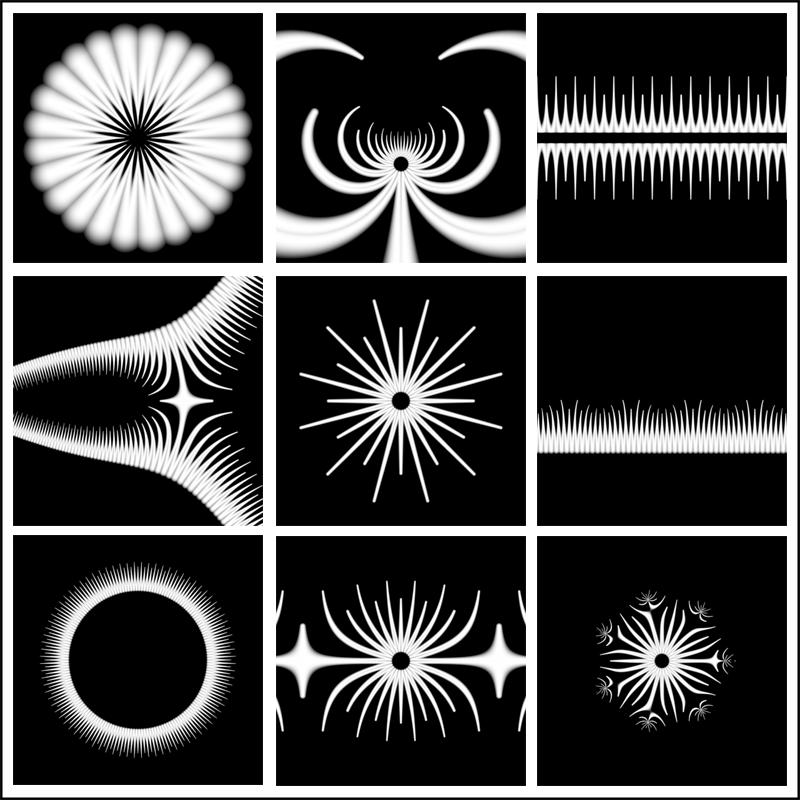
conformal maps by robert bunney

magnetoconvection by william abbett
“Without mathematics we cannot penetrate deeply into philosophy.
Without philosophy we cannot penetrate deeply into mathematics.
Without both we cannot penetrate deeply into anything. - Leibniz”
Illegal prime - Wikipedia, the free encyclopedia →
An illegal prime is a prime number that represents information that it is forbidden to possess or distribute. One of the first illegal primes was discovered in 2001. When interpreted in a particular way, it describes a computer program that bypasses the digital rights management scheme used on DVDs. Distribution of such a program in the United States is illegal under the Digital Millennium Copyright Act.[1] An illegal prime is a kind of illegal number.
(and don’t even get me started on the binary representation of Pi)

un:
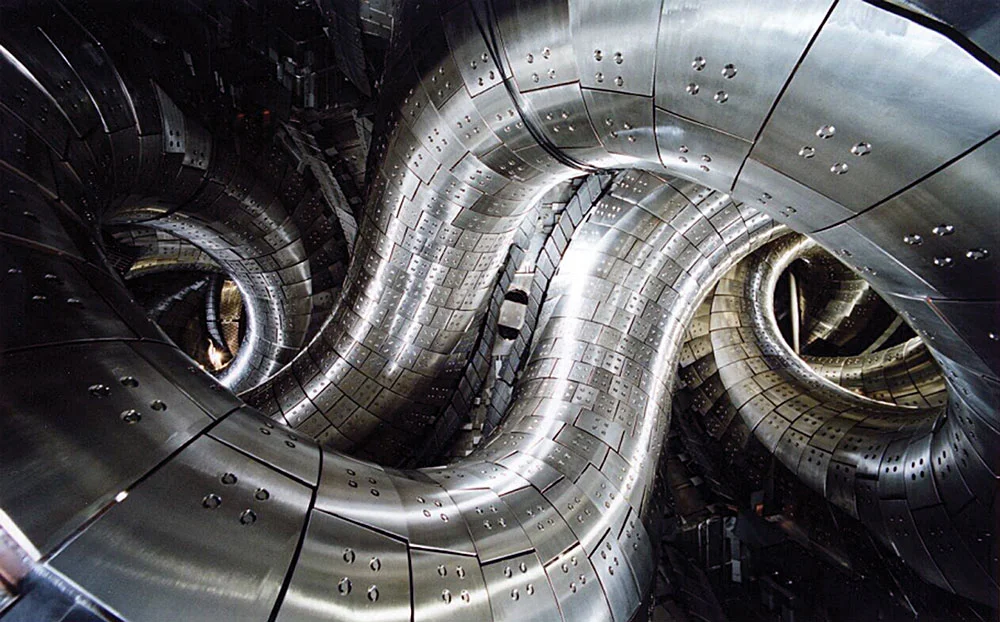
LHD
The Large Helical Device (LHD) project involves construction of the world’s largest superconducting helical device, which employs a heliotron magnetic field originally developed in Japan. The objectives are to conduct fusion-plasma confinement research in a steady-state machine and to elucidate important research issues in physics and engineering for helical plasma reactors.
These machines are what control the Matrix…




Making use of music theory, group theory, and category theory
From Musical Actions of Dihedral Groups
Abstract:
The sequence of pitches which form a musical melody can be transposed or inverted. Since the 1970s, music theorists have modeled musical transposition and inversion in terms of an action of the dihedral group of order 24. More recently music theorists have found an intriguing second way that the dihedral group of order 24 acts on the set of major and minor chords. We illustrate both geometrically and algebraically how these two actions are {\it dual}. Both actions and their duality have been used to analyze works of music as diverse as Hindemith and the Beatles.
Summary:
This paper connects the twelve musical tones to elements in the dihedral group of order 24 (the symmetries of a regular dodecagon). The translation from pitch classes to integers modulo 12 allows for the modeling of musical works using abstract algebra. The first action on major and minor chords described in the paper is based on the musical techniques of transposition and inversion. A transposition moves a sequence of pitches up or down and an inversion reflects a melody about a fixed axis. The other action arises from the P, L, and R operations of the 19th-century music theorist Hugo Riemann. It is through these operations that the dihedral group of order 24 acts on the set of major and minor triads. The paper also describes how the P, L, and R operations have beautiful geometric presentations in terms of graphs. In particular the authors describe a connection between the PLR-group and chord progressions in Beethoven’s 9th Symphony, which leads to a proof that the PLR-group is dihedral. Another musical example is Pachelbel’s Canon in D. In summary, the paper gives a very pretty explanation of what we commonly hear in tonal music in terms of elementary group theory.
Source: http://arxiv.org/abs/0711.1873v2
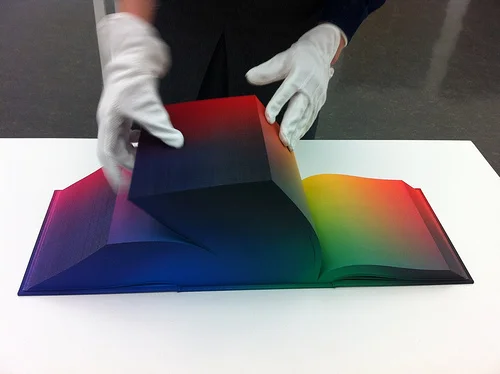

New jewellery in the pipeline. Golden surface decoration as well as the ‘watermark’ design. Subscribe to my mailing list for further details……and discounts!



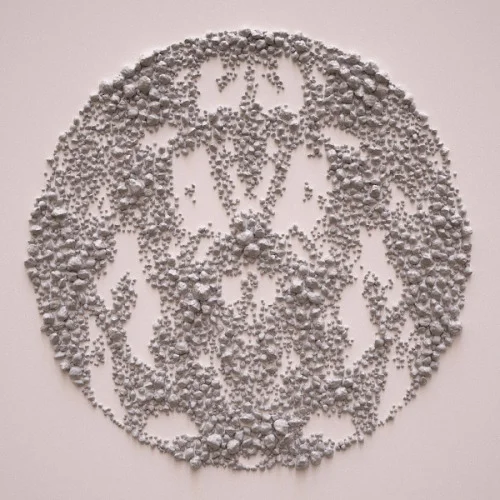


Faceture Vases


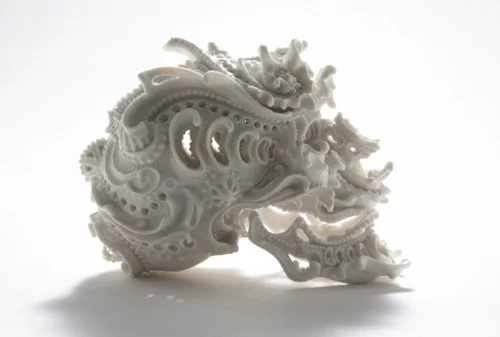
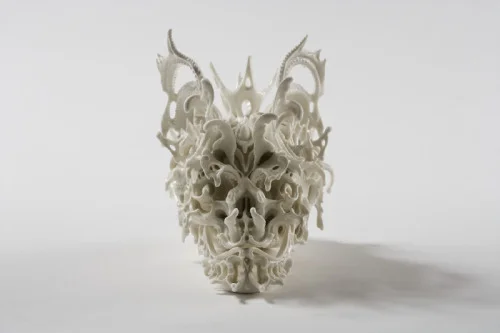
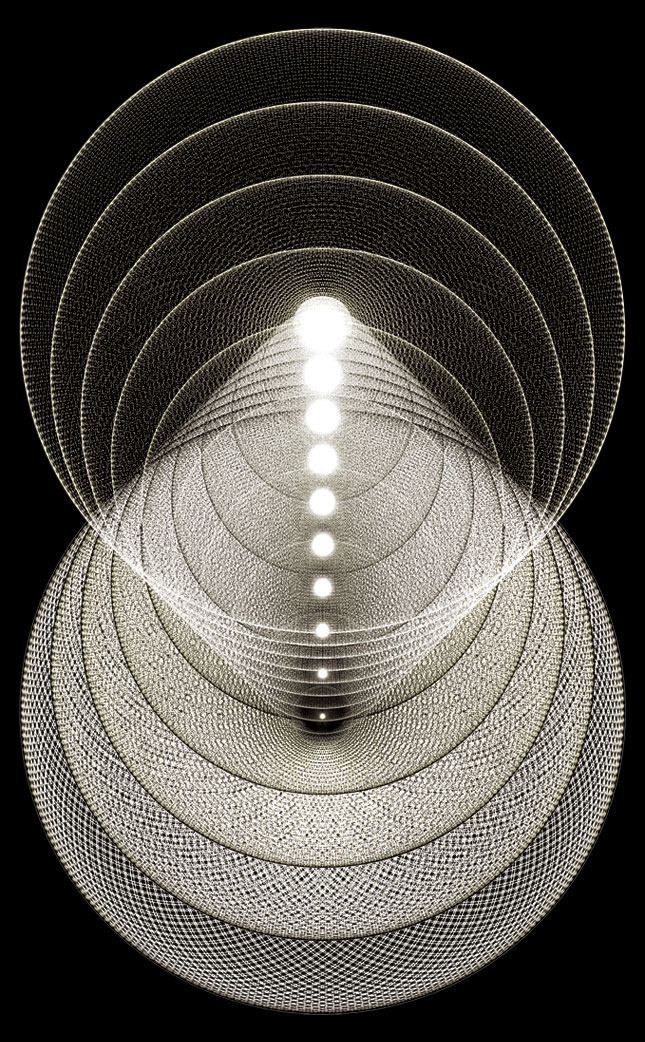
Andy Gilmore
me


Sheikh Zayed Mosque, Abu Dhabi
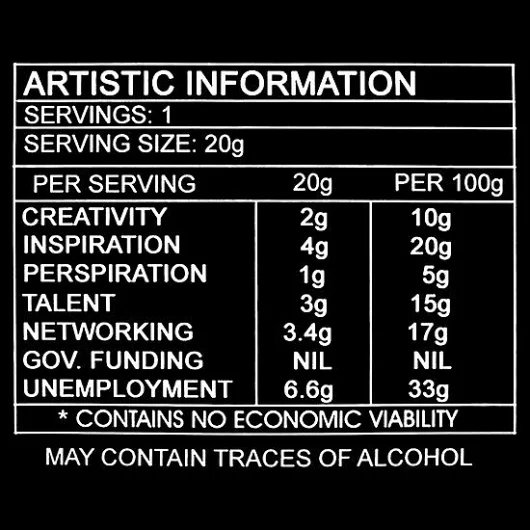
stolen from John Maeda`s site